A wellness strategy questionnaire is a short set of questions that shows which part of your health to work on first. Most people who care about their body already know a lot about fitness, food, and skin care. What they lack is a ranking: which of those areas is holding the others back right now, and how much change their week can absorb.
This article walks through the questions a coach asks at the start, area by area, and explains how to read your own answers. It takes about ten minutes. You need a pen, your phone’s calendar, and a willingness to answer for a typical week rather than your best one.
Why a strategy comes before a plan: what the questionnaire is for
A plan is a list of actions: three workouts, a meal prep session, a skin care routine. A strategy decides which of those actions deserves your effort first. Without that decision, people tend to begin with whatever is most visible, usually a new training programme, when the real constraint is five hours of broken sleep.
The questionnaire covers six areas: energy and sleep, movement, food and hydration, skin and daily care, and stress and capacity. For each one, you answer two or three plain questions and then give yourself a score from 1 to 5, where 1 means it is struggling and 5 means it is working well. The scoring is explained near the end.
Two ground rules make the answers useful:
- Answer for an ordinary week. A holiday week or a deadline week gives you data about the exception.
- Use records where you can. Your calendar, your phone’s step count, and your bank statement for food spending are more accurate than memory.
If you are still deciding whether to work with a coach at all, the piece on whether health coaching is right for you covers that decision separately. This questionnaire is about your body and habits, whichever way that decision goes.
Energy and sleep: the two questions that reveal the most
Energy and sleep come first because they affect how well you can carry out everything else. Two questions do most of the work.
Question 1: How do you feel in the first hour after waking, before caffeine? Alert, neutral, foggy, and drained are four different answers, and each points somewhere different. Waking foggy on most days suggests looking at sleep. Waking fine but crashing in mid-afternoon suggests looking at meals, movement, and stress across the day.

Question 2: On how many of the last seven days did you wake at roughly the same time? Consistency matters more than most people expect, and it is easy to check. Many people sleep reasonably well on weeknights and then shift their schedule by hours at the weekend, which leaves them tired on Monday without an obvious cause.
Add a third, optional question if it applies: does anything regularly interrupt your sleep, such as screens in bed, late meals, noise, or waking in the night? Write down what comes to mind without trying to solve it yet.
Score this area honestly. If you are tired every day despite what looks like enough time in bed, mention it to your doctor as well. Persistent exhaustion can have medical causes that no habit change will fix, and a questionnaire is not a diagnosis.
Movement and fitness: what you do versus what you think you do
The gap between what people believe they do and what they actually do is widest in movement. The question that closes it is simple.
Question 3: List every deliberate session of exercise from the last seven days, with the day and roughly how long it lasted. Do this from your calendar or fitness app. Do not count the sessions you meant to do.
Then answer two follow-ups:
- What kind of movement was it? General health guidance covers both aerobic activity and strength work. Many people do plenty of one and none of the other.
- How much of a normal day do you spend sitting? A person who trains hard for an hour and sits for the other eleven waking hours is in a different position from one who walks through the day.
Read the result without judgment. Three honest sessions a week that you can actually keep is a stronger foundation than a six-day schedule you completed once. If your list is empty, that is useful information too: it tells you that a gentle, specific start will help more than an ambitious one.
Food and hydration: honest answers without the guilt
Food answers get distorted by guilt more than any other area. People describe the meals they think they should have eaten. The questionnaire asks you to describe what happened, and treats the answer as data, not a verdict.
Question 4: Write down what you ate and drank yesterday, in order, with approximate times. One ordinary day is enough. Include snacks, coffee, and anything you had standing up.
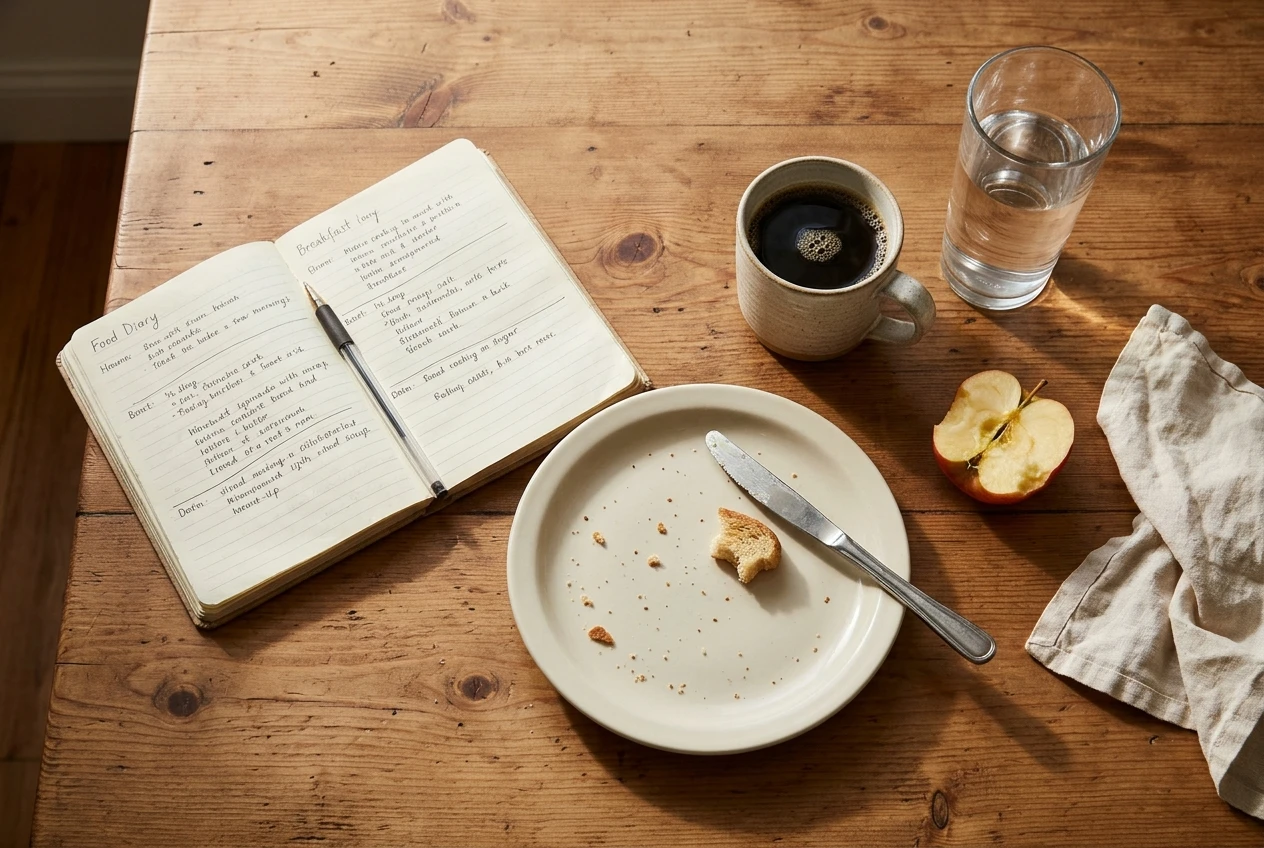
Look for patterns rather than individual foods:
- Were there long gaps followed by a large meal?
- Did a meal get skipped or replaced by something quick on most days this week?
- How much of what you drank was water, and how much was coffee, tea, alcohol, or sweetened drinks?
- Did you eat while working, driving, or scrolling?
Many of the rules people carry about food, such as what to cut or what to time, come from claims that do not hold up well. If you notice your answers are shaped by strict rules you are not sure about, the article on common nutrition myths is a good companion read.
Score this area on regularity and balance, not on perfection. A 3 here usually means the basics are present but inconsistent, which is the most common result.
Skin and daily care: reading what your skin says about the rest
Your skin responds to many things: genetics, climate, the products you use, hormones, and also sleep, stress, hydration, and food. Because it is visible and changes over days or weeks, it can act as a rough indicator of how the other areas are going. It cannot tell you everything, and a skin change alone does not identify its cause.
Question 5: Describe your daily skin routine, in order, morning and evening. Include cleansing, moisturiser, and sun protection. Many people discover that their routine is longer than they thought on one side and missing a basic step, such as daily sun protection, on the other.

Question 6: How does your skin feel and look by mid-afternoon, and has anything changed in the last few months? Dryness, new breakouts, dullness, or increased sensitivity are all worth writing down along with the date you first noticed them. Then check whether the change lines up with anything else: a poor sleep stretch, a stressful project, a new product, a change in the weather.
A caution that belongs in any honest skin assessment: a mole or patch that changes shape or colour, a rash that does not clear, or any skin change that worries you should be seen by a doctor or dermatologist. Habit coaching does not replace that.
Stress and capacity: how much change your week can really hold
This is the area people skip, and it often decides whether the rest of the strategy works. Capacity is how much new effort your life can absorb right now. Two people with identical goals can need very different first steps because one has a calm week and the other has none.
Question 7: In a typical week, how many hours are genuinely unscheduled, and what usually fills them? If the honest answer is almost none, then a plan that requires five new weekly commitments will fail regardless of how good it is.
Question 8: The last time you started a new health habit, how long did it last, and what ended it? Treat the answer as information about fit, not about your willpower. A habit that ended during a busy period was probably too large for that period.
Question 9: How would you rate your stress on a normal weekday, and what does it do to your sleep, eating, and mood? If stress is high during working hours, the techniques in stress relief at your desk are built to fit inside a workday and can serve as a first step.
A low score here does not mean you should wait to improve your health. It means the first step has to be small enough to fit.
How to score your answers and find your one priority lever
Go back through the six areas and give each a score from 1 to 5, based on the answers you wrote down, not on how you feel about them in general:
- 1: a clear problem most days
- 2: frequent difficulty
- 3: mixed, works some days
- 4: mostly working
- 5: solid and consistent
Your priority lever is the single area where a small change would do the most for your overall health right now. To find it, use these steps:
- Find your lowest scores. The areas at 1 or 2 are your candidates.
- Break ties by order. When two areas score the same, pick the one that affects the others most. Sleep and stress generally sit upstream of food, movement, and skin, so they come first when tied.
- Check it against your capacity score. If capacity is a 1 or 2, choose the smallest version of the change, such as a fixed wake time, not a full overhaul.
- Choose one change, not several. A single change you keep teaches you more than four you drop.
Here is an example of how it reads, a made-up set of scores for illustration. Energy 2, sleep 2, movement 3, food 3, skin 4, capacity 2. The lowest scores are energy and sleep; they are linked, and capacity is low. The priority lever is a consistent wake time, held for two weeks, with nothing else added. Movement and food stay as they are until that change is steady.
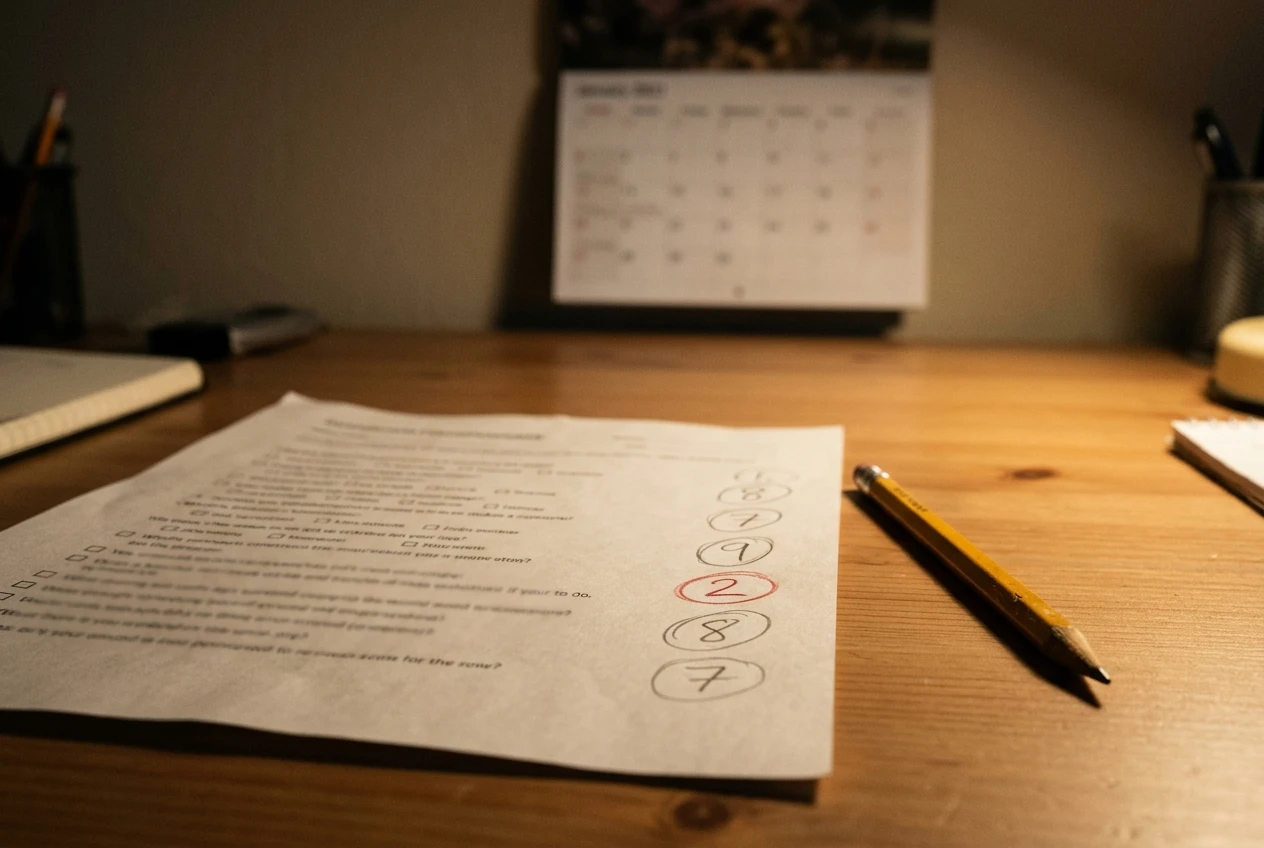
Notice what the example leaves out: the movement score is not a problem, so no new training programme appears. The point of the exercise is to leave things alone as much as to change them.
Take the questionnaire and request your discovery session
You now have nine questions, six scores and one candidate for your first change. That is enough to start on your own. A discovery session adds a second view: someone who looks at your answers, checks whether the lever you picked is the right one, and helps you shape a first step that fits your actual week.
The questionnaire takes about ten minutes. Answer for a typical week, use your calendar and records, and score each area before you read the next one so the earlier answers do not colour the later ones.
Complete the Wellness Strategy Questionnaire below and request your discovery session, so we can turn your answers into a first step that fits your life.